
Grey flooring had its moment— more specifically, grey luxury vinyl plank (LVP) flooring had a nearly 10 year moment and can now be found in MANY of the homes that were either built or remodeled from around 2010 to 2020.
So what do you do when your floors feel stuck in a past trend—but tearing them out isn’t in the plan (or the budget)? The good news is, there’s no need to start from scratch. With a few thoughtful updates, you can make grey LVP flooring feel right at home in today’s warmer, more organic interiors. It’s all about shifting the context around them.
Follow these 5 tips to create a cozy and updated home–working with your grey floors, not against them.
1. Read your floors undertones
Before making any design decisions, look closely at your grey flooring. Not all greys are created equal. Many have subtle (or not-so-subtle) undertones.
One way to identify the undertones in your flooring is to pick up a handful of paint chips from your local paint supplier. Lay them out on your floor.
Seeing various colors next to your floor can help accentuate the undertones and suggest a color direction that will work well with them. Common undertones include hints of taupe, cool silver, green-grey, or brown.
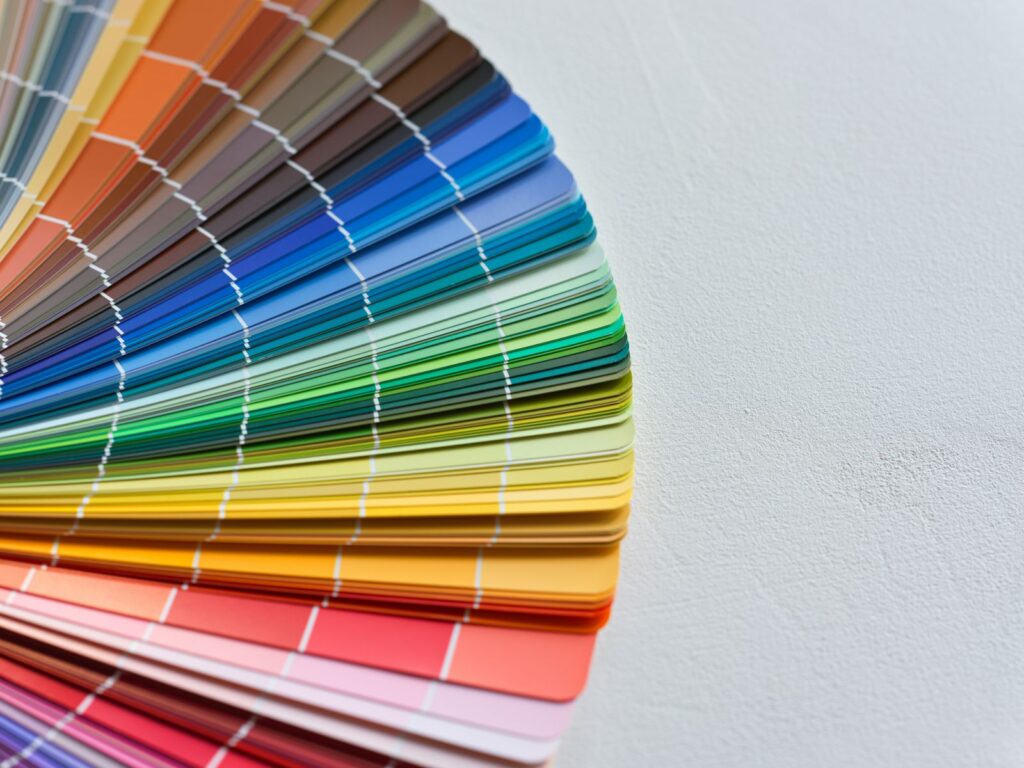
When you understand the undertones in your floor, you can build a palette that works with those subtle tones.
2. Next, choose a white wall color that works with your flooring
Grey floors tend to feel cold, especially when paired with other cool tones. Warm them up by choosing wall colors with creamy, beige, or earthy undertones. This will immediately update your home, especially if you currently have bright white trim and cool, grey walls (common builder choices when grey floors where at their peak.
The following image shows a sampling of grey LVP flooring and a few possible white paint options that might work in your home. The difference between the shades of white is subtle but can really make a difference in creating a cohesive end result.
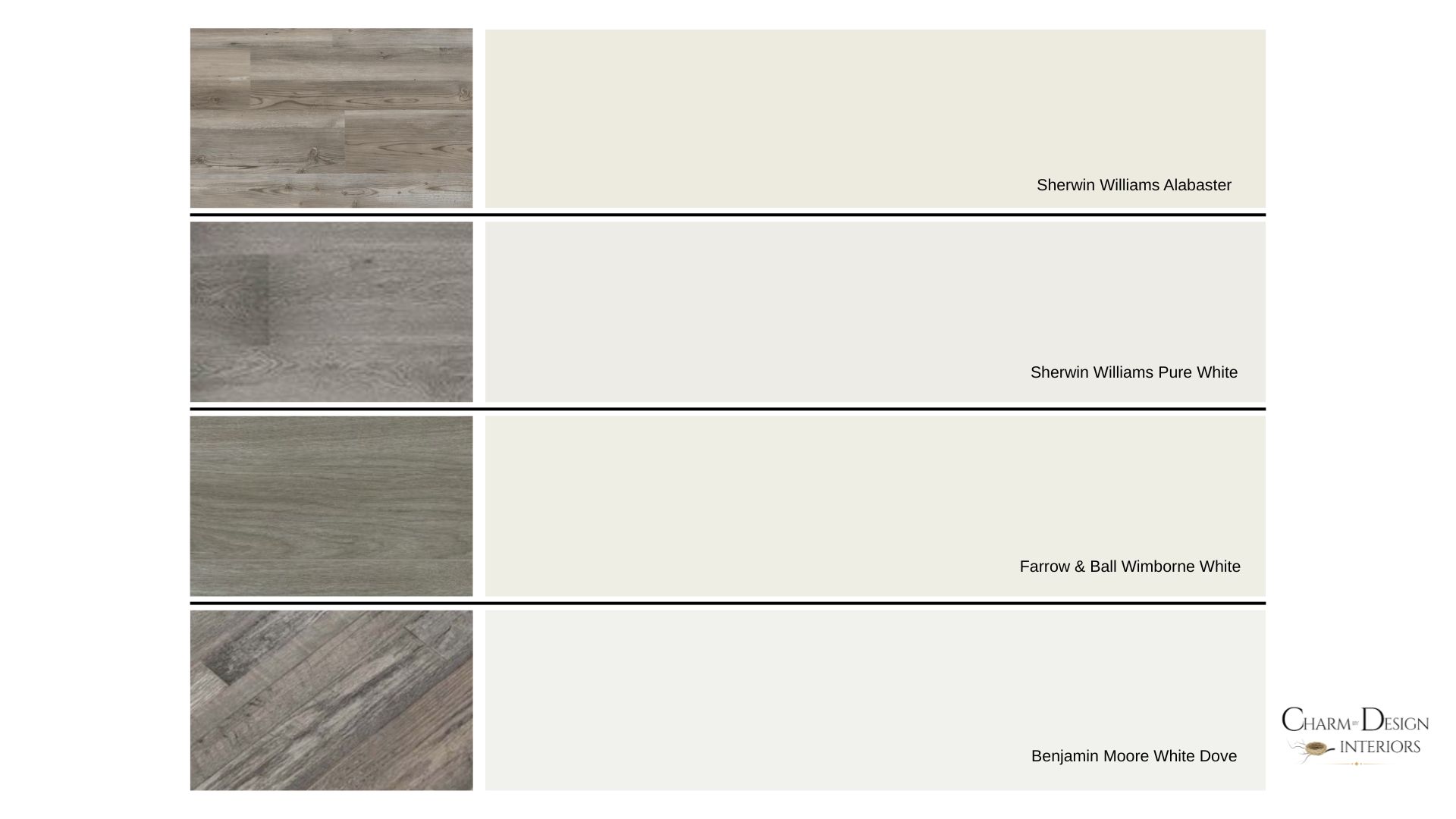
Note: Avoid cool whites or blue-based greys on the walls—those will exaggerate the chill.
3. Maintain some grey in the rest of your decor
You may be thinking, “Wait, I thought we were downplaying the grey, not adding more!”
Yes, the goal is to deemphasized the grey flooring, but if you completely disregard grey in your decor, your home will lack cohesiveness in the end.
Instead, introduce rugs, wallpaper, artwork, etc. that have some grey tones alongside more prominent warmer tones.
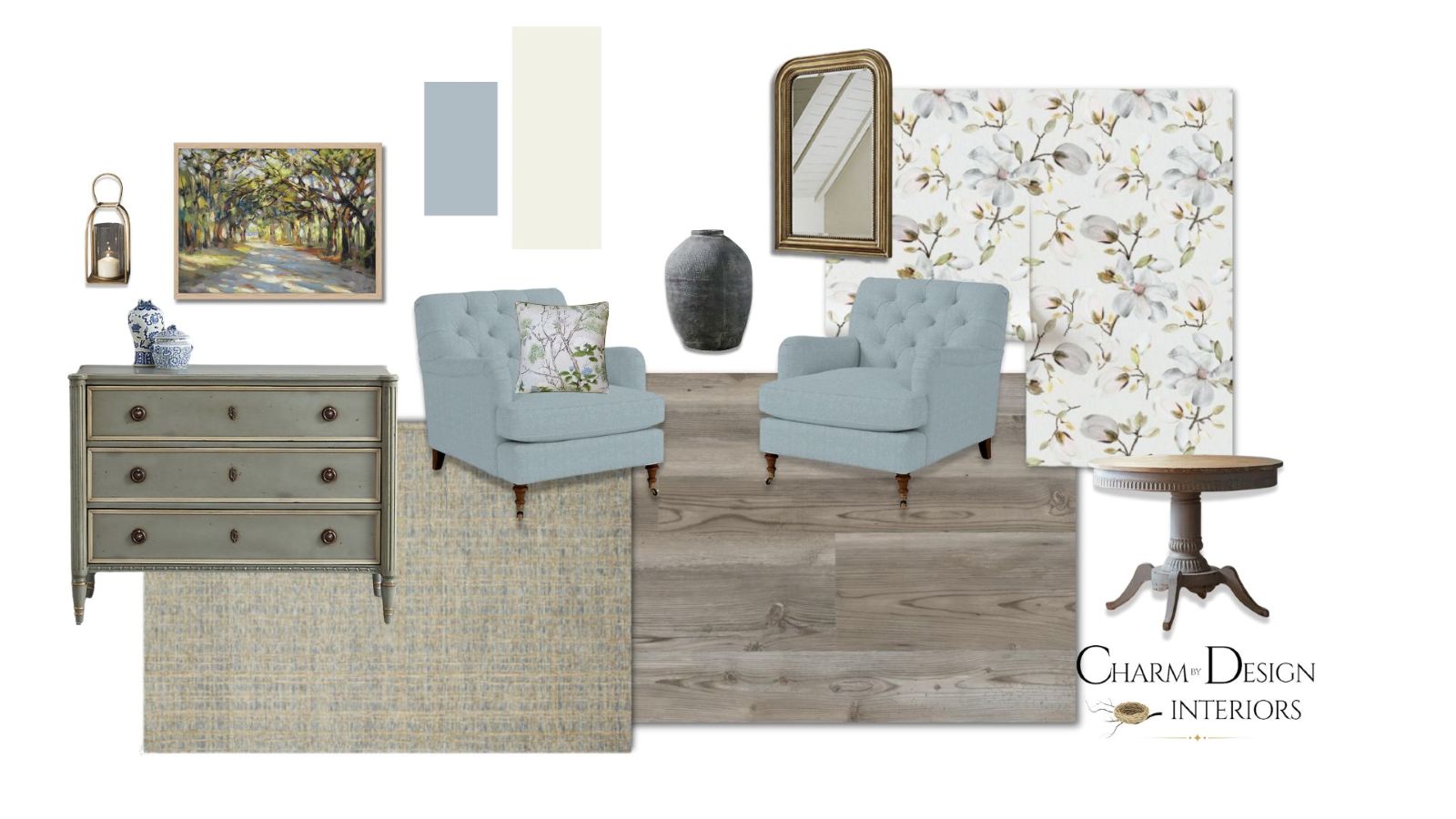
Remember, the color grey in and of itself is not bad by any means!
4. Add natural materials and texture
Grey flooring often feels sleek and flat. What it’s missing is tactile warmth. You can fix that instantly by layering in:
- A jute or wool area rug
- Linen or cotton drapes in oatmeal or clay
- Natural wood furniture in deep wood tones.
These add warmth and dimension—two things grey LVP flooring often lacks.
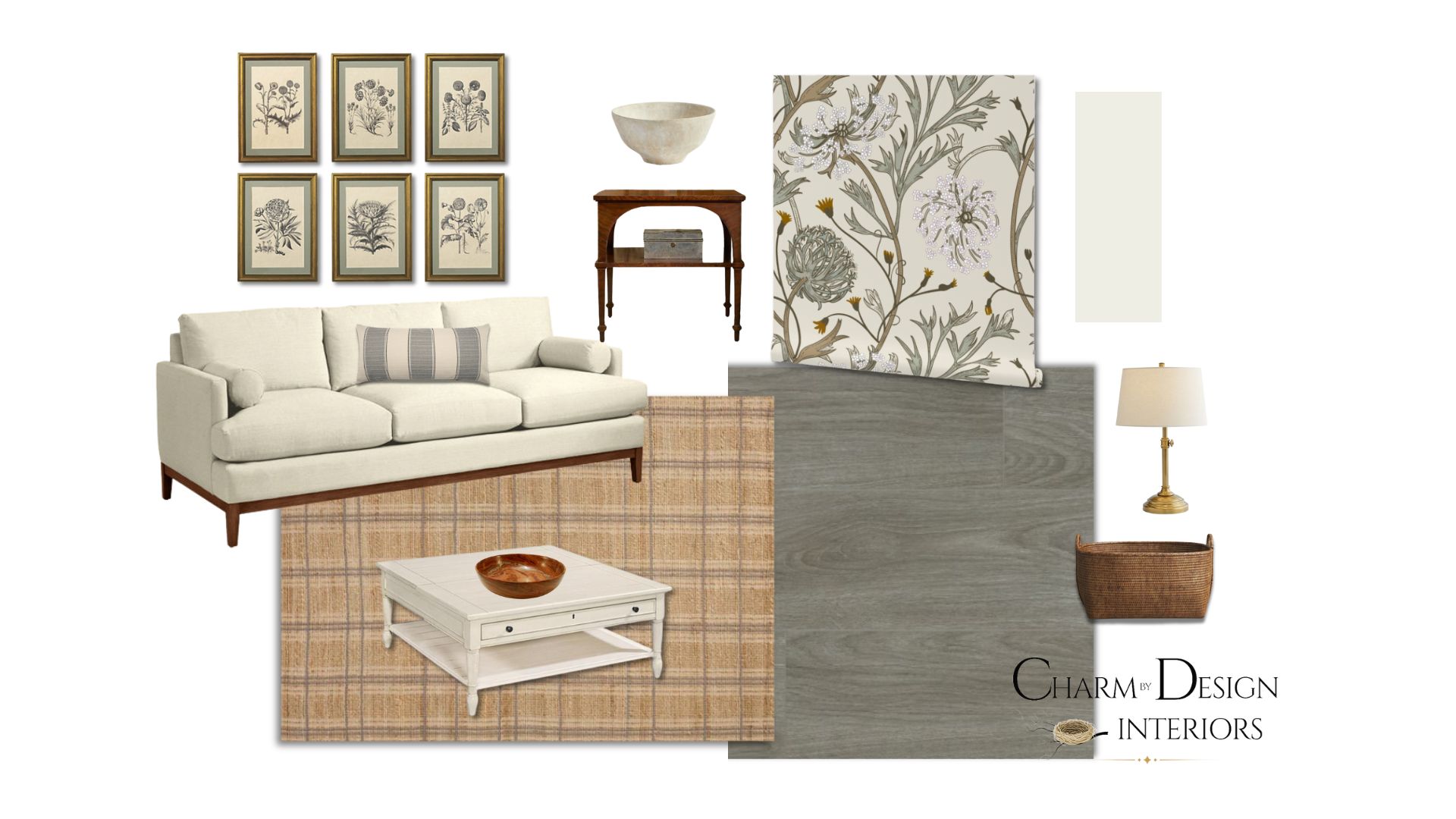
The following mood board shows and example of how choosing nature-inspired colors and motifs with a touch of grey can deemphasis your grey floors and make them a beautiful asset! By introducing warm, natural tones with a touch of grey, you will work with your grey floors and not against them.
5. use pattern and personality to distract the eye
Want your floors to fade into the background? Don’t hide them—just shift the focus. Add a bold pattern or a moment of whimsy elsewhere in the room to grab attention.
Some favorites:
- Botanical or block-printed wallpaper
- A patterned runner down a hallway
- Gallery wall with vintage frames and collected art
- Bold upholstery or throw pillows in olive, ochre, or blush
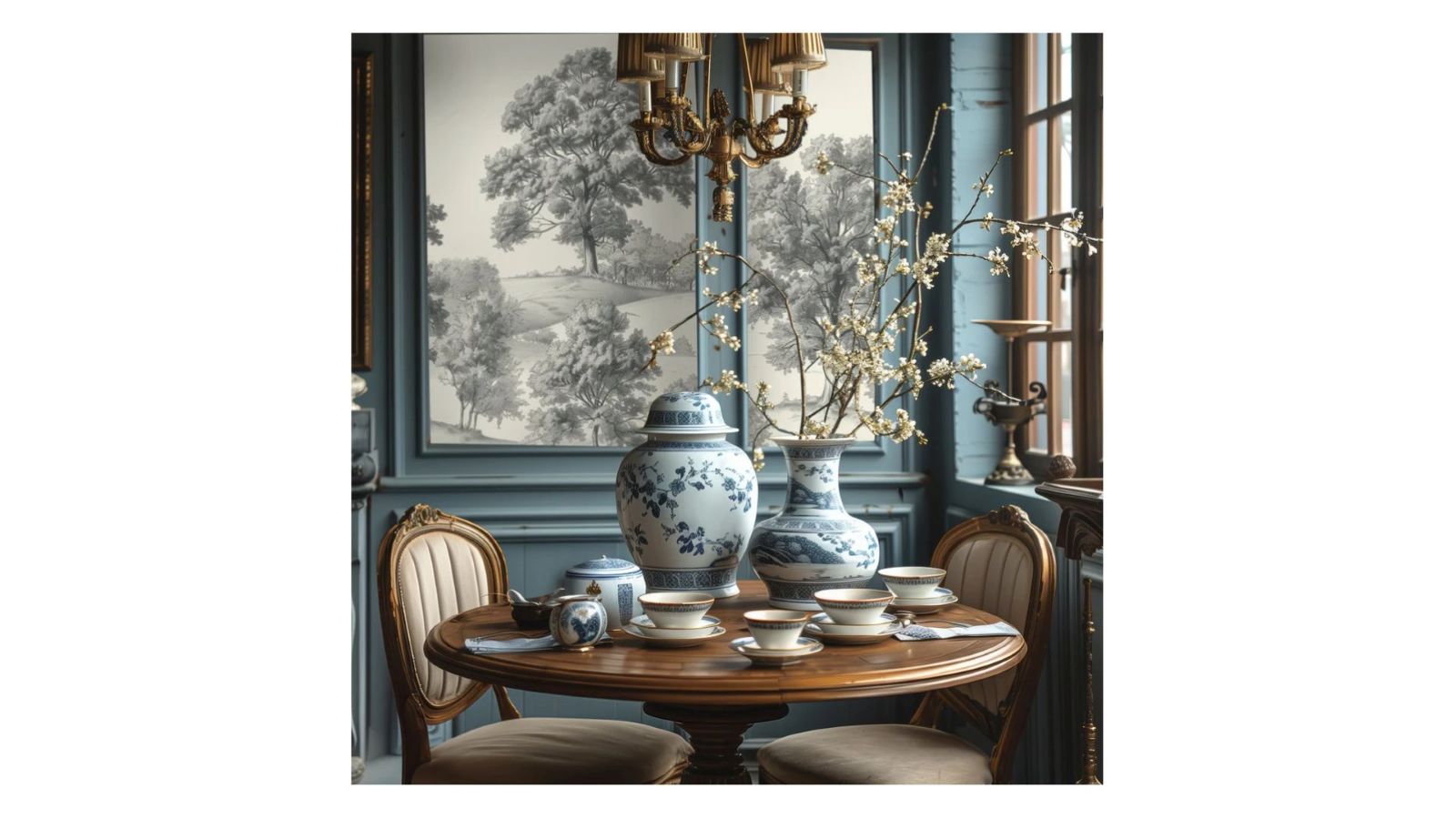
Take Away
With a little intention and the right design choices, grey LVP flooring doesn’t have to be a design regret—it can be the foundation for a fresh, updated look. By embracing its undertones, pairing it with the right whites, mixing in warmth and natural texture, and giving the eye somewhere else to land, you can create a space that feels cohesive, current, and uniquely yours.
Work with your grey floors and not against them.